
Last updated November 14, 2026
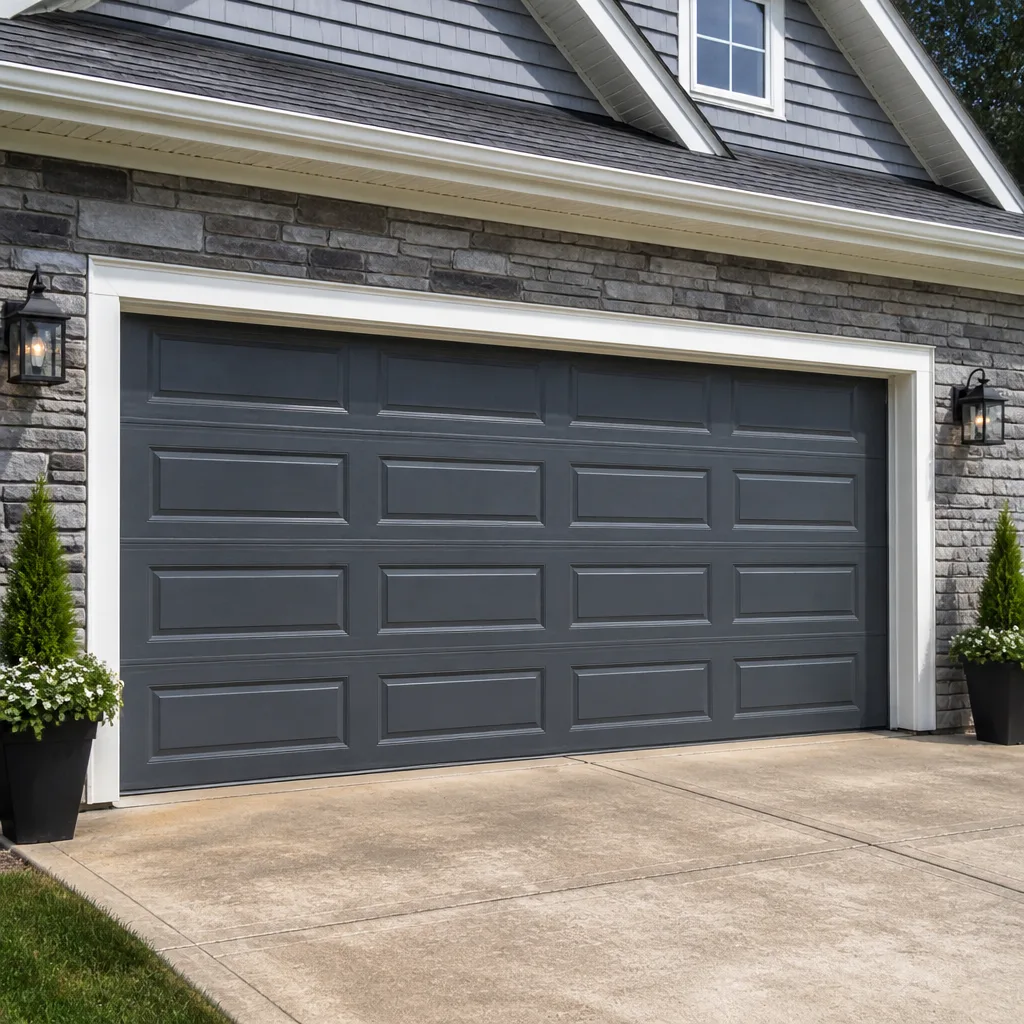 Raised-panel steel
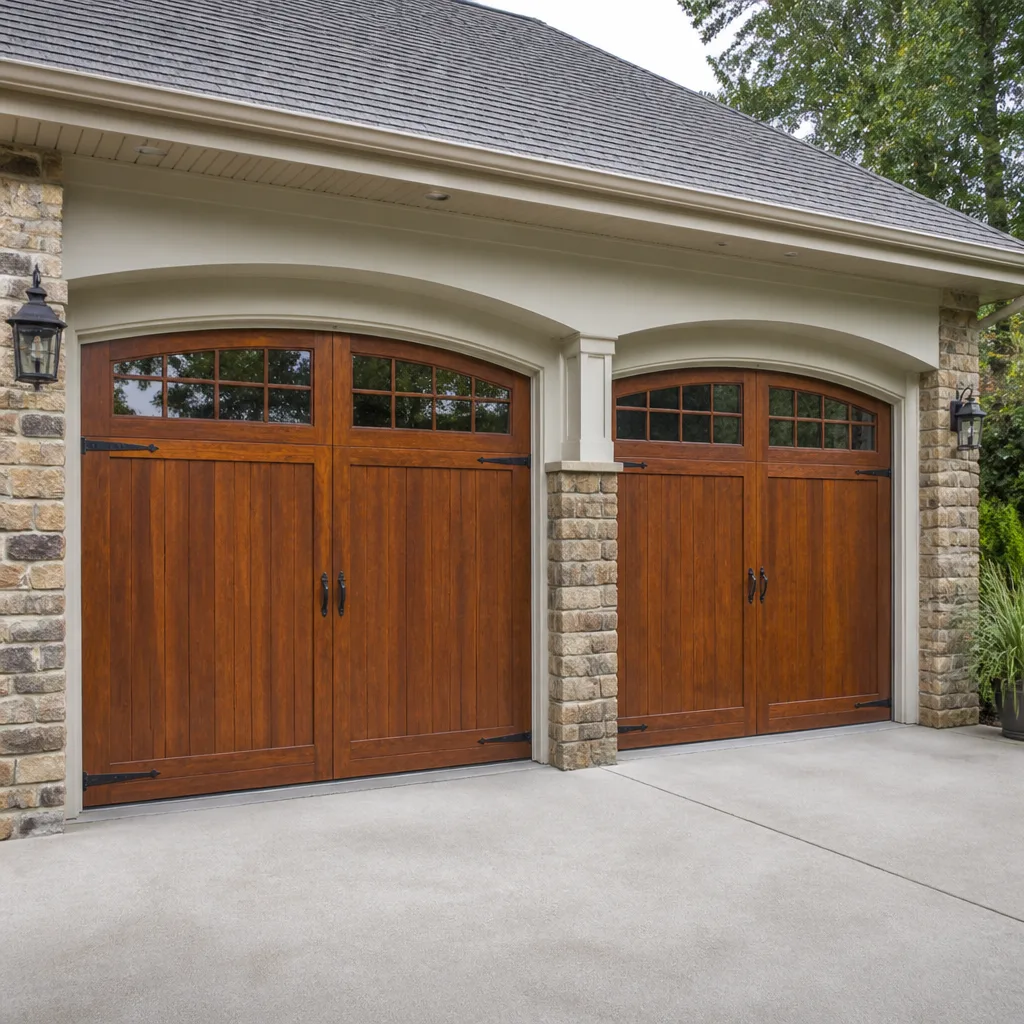 Carriage house
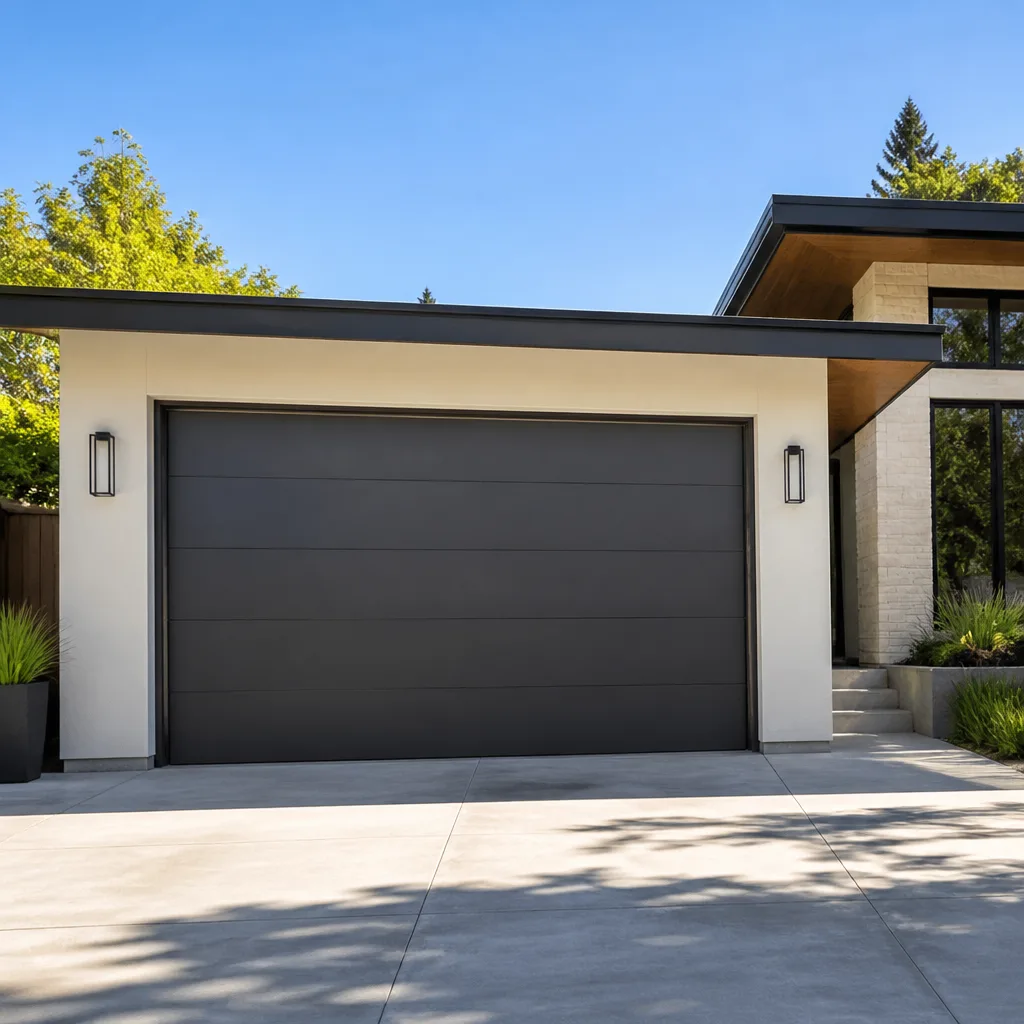 Modern flush
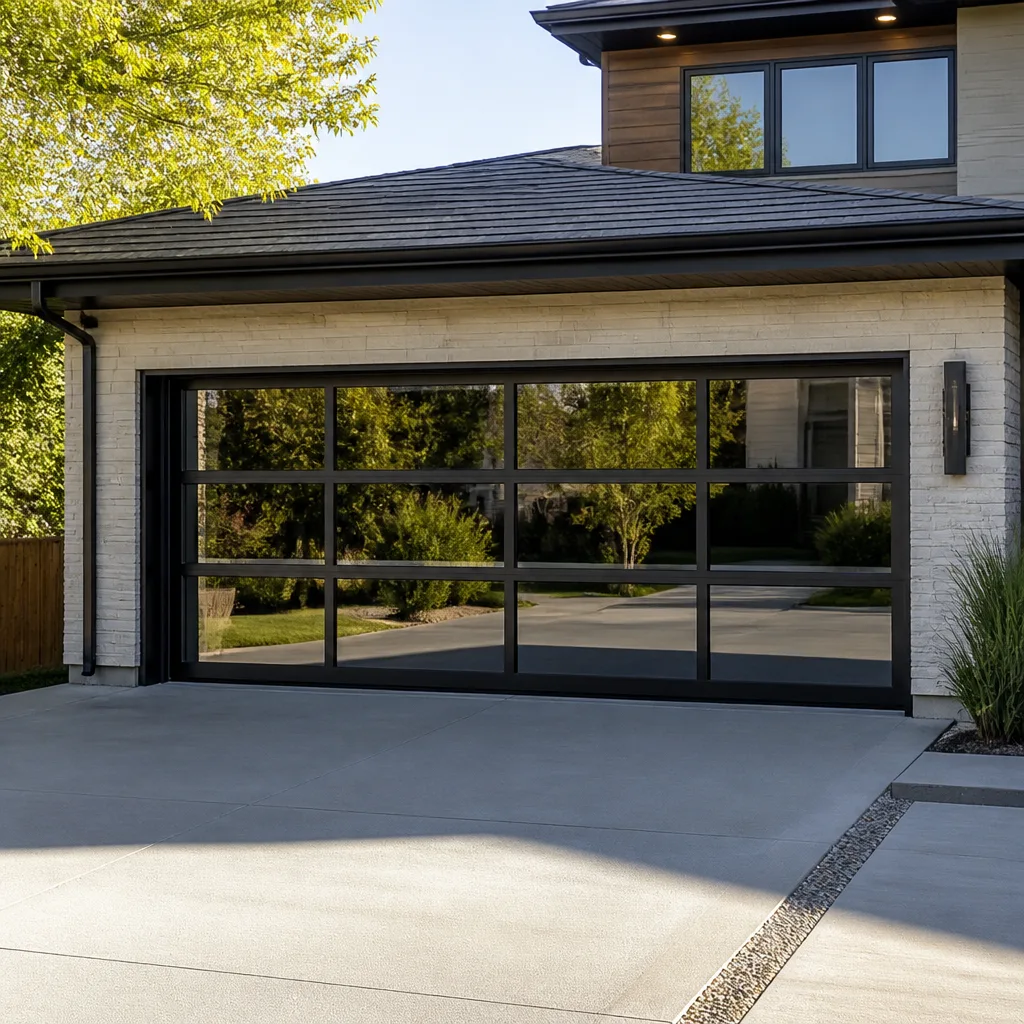 Full-view glass
 LiftMaster openers
 Chamberlain openers
Full 25-point door and opener safety check with every visit - springs, cables, rollers, tracks, and your LiftMaster or Chamberlain opener included
You get a price before we start. It does not change when the pro arrives.
Get your free estimateSeasonal Garage Door Care for Brownsville: Year-Round Homeowner’s Guide
Most seasonal garage door guides assume you live somewhere with four distinct seasons. They tell you to winterize in October and tune things up in April. That advice doesn’t map onto Brownsville. Here, the real maintenance window opens in January after months of heat, the hardest stress on your door comes from summer temperatures that don’t let up, and the weeks before hurricane season matter more than any fall checklist. This guide sets out a care calendar built for the actual Brownsville year: storm prep, summer heat, post-storm checks, and the mild winter window when lubrication and a full hardware inspection pay off most. You’ll learn what to look at, when to look, and when to call a professional.
Quick Answer
In Brownsville, garage door care follows the local year rather than the textbook four seasons. Check and reinforce your door before hurricane season, watch springs, opener motors, and photo-eye sensors through the sustained summer heat, inspect panels, tracks, and seals after any heavy rain or high wind, and use the mild January to February window for lubrication, hardware inspection, and opener servicing. One annual service timed to that mild window plus post-storm checks covers most of what a Brownsville door needs.
Styles & brands we work with
- Raised-panel steel
- Carriage house
- Modern flush
- Full-view glass
- LiftMaster openers
- Chamberlain openers
Table of Contents
- Why a Brownsville Garage Door Needs Its Own Care Calendar
- Before Hurricane Season: Bracing and Inspection
- Mid-Summer: Heat and Its Effect on Springs, Openers, and Sensors
- After the Storm: What to Inspect on Panels, Tracks, and Seals
- The Mild Winter Window: Lubrication and Full Servicing
- A Simple Monthly Check You Can Do Yourself
- Brand-Specific Considerations
- What Garage Door Care Costs in Brownsville
Why a Brownsville Garage Door Needs Its Own Care Calendar
Brownsville doesn’t run on spring, summer, fall, and winter the way northern guides imagine. It runs on hot, hotter, storm season, and a short mild window that most years stretches across January and February. That changes what your garage door faces and when it needs attention.
Through much of the year the heat is sustained. It doesn’t drop far overnight, and it doesn’t fall away in a gentle autumn. Springs stay under load in warm air, opener motors run, and photo-eye sensors sit in conditions that can fog or cloud their lenses. The humidity is real too, and it works on the metal parts of a door the way it works on everything else outside: slowly, quietly, and without announcing itself.
Then there’s storm season. Brownsville sits in a part of Texas where named storms are a genuine planning consideration, not a hypothetical. A garage door is one of the largest openings in a home. It’s worth knowing its condition before a watch is issued, not after.
The mild weeks of January and February are your best friend here. This is the window when you’re not fighting the heat and you’re past storm recovery. It’s when a full inspection, lubrication, and opener service actually go smoothly and when small problems are easiest to catch. A calendar built around this reality beats a generic spring-and-fall checklist every time in Brownsville.
- January to February: mild window. Full lubrication, hardware inspection, opener servicing, spring assessment.
- March to May: storm prep. Bracing, track and roller check, seal inspection, panel integrity.
- June to September: heat management. Watch springs, motors, and sensors. Don’t ignore odd sounds.
- After any heavy rain or high wind: post-storm inspection of panels, tracks, and seals.
If you’re not sure where your door falls on the maintenance timeline, a garage door repair visit is a reasonable place to start. A technician can tell you what condition the door is in and what to prioritize.
Before Hurricane Season: Bracing and Inspection
The time to reinforce your garage door is months before a named storm, not during a watch. Waiting until storm warnings are up means you’re making decisions under pressure with limited time and hardware that may not be in stock. Bracing and inspection before the season starts gives you a clear picture of what your door is and isn’t ready for.
Garage doors are rated for wind pressure, and doors installed many years ago may not meet current expectations. If you don’t know the wind rating on your door, that’s something worth finding out. A local provider who works with brands like Clopay, Amarr, Wayne Dalton, and Raynor can help you identify what you have and whether it’s built for the conditions. For older homes especially, a pre-season assessment matters.
Here’s what a pre-season check involves:
- Inspect panel attachment. Each panel should be firmly seated. Loose or shifting panels are a sign the door isn’t holding together the way it should.
- Check hinges and fasteners. Look for rust, loose screws, or hinges that have started to pull. Rusted hardware weakens under stress.
- Look at bracing. Many doors can be fitted with a horizontal or vertical reinforcement strut across the panels. Whether yours needs one depends on the door’s construction and rating; this is worth asking a professional about rather than guessing.
- Check the tracks. Tracks should be straight and securely anchored. A bent track is a real problem in wind, not a cosmetic one.
- Test the door’s travel. A door that binds, jerks, or stops mid-travel is likely under strain. That’s a service issue before it’s a storm issue.
- Inspect the bottom seal. A worn seal lets wind and water under the door. Replace it before the season, not after.
This is also the time of year to think about your opener. A LiftMaster or Chamberlain opener in a Brownsville home is often the same one that was installed with the door, and it may be a few years past its first decade. If it’s been hesitating or making new noises, get it looked at before storm season rather than during.
Mid-Summer: Heat and Its Effect on Springs, Openers, and Sensors
Sustained heat is harder on a garage door than a single cold snap. In Brownsville, summer temperatures and the warmth that builds inside a closed garage put continuous load on the mechanical parts of the door. Three areas deserve attention through July, August, and September.
Springs. Torsion and extension springs are under constant tension, and heat adds to the stress. The spring is the hardest-working part of the door and the one most likely to fail. If you notice the door getting heavier to lift by hand (on a manual door), hearing a loud snap, or seeing a visible gap in a torsion spring, stop using the door and call a professional. Spring replacement is dangerous work: the spring is under extreme tension and can cause serious injury if you try to handle it yourself. This is not a component to test your DIY range on.
Opener motors. An opener motor that’s already working hard in normal conditions has a tougher job through summer heat. A LiftMaster or Chamberlain opener built for smart-home integration will usually show signs of heat stress as hesitation, intermittent stopping, or a motor that feels very warm after use. Craftsman and Genie openers from earlier eras have similar patterns. None of these are cause for panic, but repeated stopping under load is a signal to have it checked.
Photo-eye sensors. These small sensors near the bottom of the tracks do two jobs: they keep the door from closing on someone, and they tell the opener when the path is clear. In high heat and humidity they can fog, collect dust, or drift out of alignment. A door that won’t close or reverses partway down is often a sensor issue, not a door issue. Wiping the lenses and checking that the two sensors are pointed straight at each other is something you can do yourself and is worth doing a couple of times through the summer.
- Listen for new sounds from the door and opener. Heat amplifies small problems.
- Wipe photo-eye lenses monthly through summer.
- Watch for door reversal or failure to close. Test the sensor alignment before anything else.
- Look at springs for visible wear. Do not attempt to adjust or replace them yourself.
- If the opener hesitates repeatedly, stop pushing it. Get it looked at.
If your door is binding or your spring is showing wear, a garage door opener repair call is worth making before a small issue becomes a mid-summer failure.
After the Storm: What to Inspect on Panels, Tracks, and Seals
After any heavy rain or high wind event in Brownsville, a garage door deserves a walk-around inspection. Storms don’t always leave obvious damage; they leave subtle deformation, small misalignments, and seals that have shifted without you noticing. Catching those early prevents them from compounding.
Here’s a post-storm checklist:
- Panels. Look for dents, bends, or panels that no longer sit flush. A slightly warped panel can throw off the door’s balance.
- Tracks. Tracks should be straight and firmly fixed. Bent tracks cause binding. Loose tracks are a safety problem, not just an annoyance.
- Hinges and fasteners. Check for rust that wasn’t there before, and for screws or bolts that have loosened.
- Bottom seal and side seals. Check that the seal is intact and sitting flush against the ground or frame. A displaced seal lets water in and lets conditioned air out.
- Drive on the door. Open and close it slowly and watch for jerking, hesitation, or a door that doesn’t seal evenly on both sides.
- Opener behavior. A door that suddenly reverses, won’t fully close, or cycles more roughly than before is telling you something changed. Photo-eye lenses can be knocked out of alignment by storm debris or moisture.
If the door took direct impact or if it won’t close evenly after a storm, it’s a good idea to have a professional look at it before using it again. A door that’s out of balance puts stress on the opener, and an opener trying to push a damaged door will fail faster.
Routine post-storm checks are also a good habit for maintenance in general. To see what a typical service visit includes, or to book one in the Brownsville area, you can read more about Brownsville service options and get an appointment that fits your schedule.
The Mild Winter Window: Lubrication and Full Servicing
January and February are the best weeks of the Brownsville year to do the full maintenance pass. The heat has eased, storm season is behind you, and there’s a comfortable window before things warm up again. This is when lubrication, a complete hardware inspection, and an opener service make the most sense.
Lubrication is the single highest-value thing you can do for a garage door’s moving parts. A few things to know:
- Rollers and hinges: a few drops of garage-door lubricant (not heavy grease) on each roller and each hinge pin.
- Springs: a light coating of lubricant on torsion springs helps with rust and noise, but only once the door is at rest. Never reach into the spring area to apply it.
- Tracks: the running surfaces of the tracks benefit from a light film of lubricant. Don’t grease the vertical rails heavily; dust sticks to grease.
- Opener chain or belt: check the manufacturer’s guidance for your specific opener. LiftMaster and Chamberlain belt-drive units need less attention than chain-drive models; Craftsman and Genie chain drives usually need a check annually.
A full winter service visit should also include:
- Balance check: the door should stay put when opened halfway and released.
- Spring condition assessment: age, visible wear, and the door’s weight feel.
- Roller condition: replacements are cheap, and worn rollers are a common source of noise.
- Opener force and travel settings: check that they’re correct for the door’s actual weight.
- Safety reverse test: confirm the door reverses on contact and on a blocked photo-eye.
- Weather seal check: bottom and side seals, with replacement where worn.
Doing this once a year in the mild window catches most small problems before they get expensive. If you’d prefer to have it done properly, the team at Amberly can service any brand of door and opener, from LiftMaster to Raynor, in one visit.
If you’re considering a new door rather than a service, the winter window is also a practical time to think about Amberly Garage Door Repair for a measure and a written price. Installation work is measured, ordered, and scheduled, so a quiet January appointment gives lead times room to breathe.
A Simple Monthly Check You Can Do Yourself
Between the annual winter service and the pre-storm inspection, a quick monthly check catches problems while they’re still small. It takes ten minutes and covers the things most likely to fail without warning.
- Listen. A door that sounded fine last month and sounds different now is telling you something. New grinding, popping, or squealing usually means wear on the rollers or hinges.
- Watch it open. The door should travel smoothly and stop cleanly at the top and bottom. Hesitation at the bottom often means a sensor issue or a misaligned track.
- Test the safety reverse. Place a small object in the door’s path and close it. The door should reverse. If it doesn’t, get it serviced before using it again.
- Look at the springs. You’re checking for visible gaps or rust, not adjusting them. Leave spring work to a professional.
- Check the photo-eye lenses. Wipe them and confirm they’re pointed at each other. In Brownsville summers, this is worth doing monthly.
- Inspect the bottom seal. Look for tears, gaps, or a seal that’s come away from the door. A small seal repair is cheap now and a bigger water problem later.
These are checks, not repairs. Anything that requires adjusting springs, replacing opener parts, or bending tracks back into place should go to a professional. The one exception is the photo-eye lens wipe and alignment, which is safe to do yourself.
Brand-Specific Considerations
Different doors and openers have different service needs. Knowing your brand helps you ask the right questions and get the right parts.
Openers. LiftMaster and Chamberlain are the two dominant smart-home opener platforms. Their Wi-Fi and myQ-connected models have firmware and app integrations that affect how they behave, and service should account for that. Chamberlain and LiftMaster repair work is not difficult to find in Brownsville, but a technician familiar with the model’s Wi-Fi behavior and error codes is worth asking for. Craftsman and Genie openers, especially older units, are common in Brownsville homes, and they tend to have straightforward service needs: worn gears, failing logic boards, or drive chains in need of adjustment.
Doors. Clopay, Amarr, Wayne Dalton, and Raynor are among the door manufacturers most commonly found on residential garage doors in this area. Panel construction, hinge attachment, and spring systems vary between them, and a service visit should identify the make and model before diagnosing. That may sound obvious, but generalist handymen often don’t; they guess at the part. A specialist who works across these brands can tell the difference.
If you don’t know the brand on your door, it’s usually printed or stamped somewhere on the panel or stamped on the opener housing. If you can’t find it, a technician will identify it during a visit.
Amberly handles service across eight brands: LiftMaster, Chamberlain, Genie, Clopay, Amarr, Wayne Dalton, Craftsman, and Raynor. That range means you don’t have to wonder whether your door or opener is “covered.” If you’re on a Raynor spring, a Wayne Dalton panel, or a Chamberlain opener, the service is the same call.
What Garage Door Care Costs in Brownsville
Typical garage door service costs in Brownsville vary by the type of job and the parts involved. A basic service (lubrication, inspection, safety-reverse test, minor adjustments) is usually in a modest range. A spring replacement is more involved and depends on whether it’s one spring or a matched pair, since springs are usually replaced together and a pair costs roughly double a single spring. Opener repair depends on the part, from a simple gear replacement to a logic board. New door installation is a separate cost that includes measuring, ordering, and fitting, and it should always come with a written estimate before work starts.
- Annual service and lubrication: a modest line item, ideal in the January to February window.
- Spring replacement: one spring is priced per unit; a matched pair is usually replaced together and costs roughly twice as much as one.
- Opener repair: depends on the failing part (gear, board, drive, sensor).
- Track or roller replacement: depends on how many parts are affected.
- New door installation: measured and quoted per job, in writing, before any work begins.
We quote every job before any work starts, and the written estimate is the price. If you want a number for your specific door, the fastest way is to call. Estimates are free.
Common Mistakes to Avoid
- Waiting for storm warnings before bracing your door. Bracing is a pre-season job, not a storm-day one. Once a watch is issued, you’re working against limited time and possibly limited hardware.
- Ignoring a spring that’s already showing wear. Springs don’t recover from a visible gap or a stretch. If your door suddenly feels heavier, stop using it and call. Spring work is dangerous and shouldn’t be attempted yourself.
- Greasing the tracks heavily. A light film on the running surfaces is enough. Thick grease attracts dust, which accelerates wear.
- Skipping the photo-eye check through summer. In Brownsville’s heat and humidity, sensors fog and collect debris. A door that reverses mid-descent or won’t close at all is often a sensor problem you can catch early.
- Doing the winter maintenance “whenever.” The mild January to February window is the easiest time to service a door in Brownsville. Doing it in the heat or after a failure is harder on you and harder on the parts.
- Assuming post-storm damage will show up obviously. Subtle panel or track damage from wind is often invisible until the door starts binding or the opener starts failing. A walk-around after every storm catches what the eye misses in the moment.
- Trying to diagnose opener behavior on a door that’s out of balance. If the door is heavy or uneven, the opener will misbehave. Fix the door and the opener often behaves. The source is usually the door, not the opener motor.
See the difference
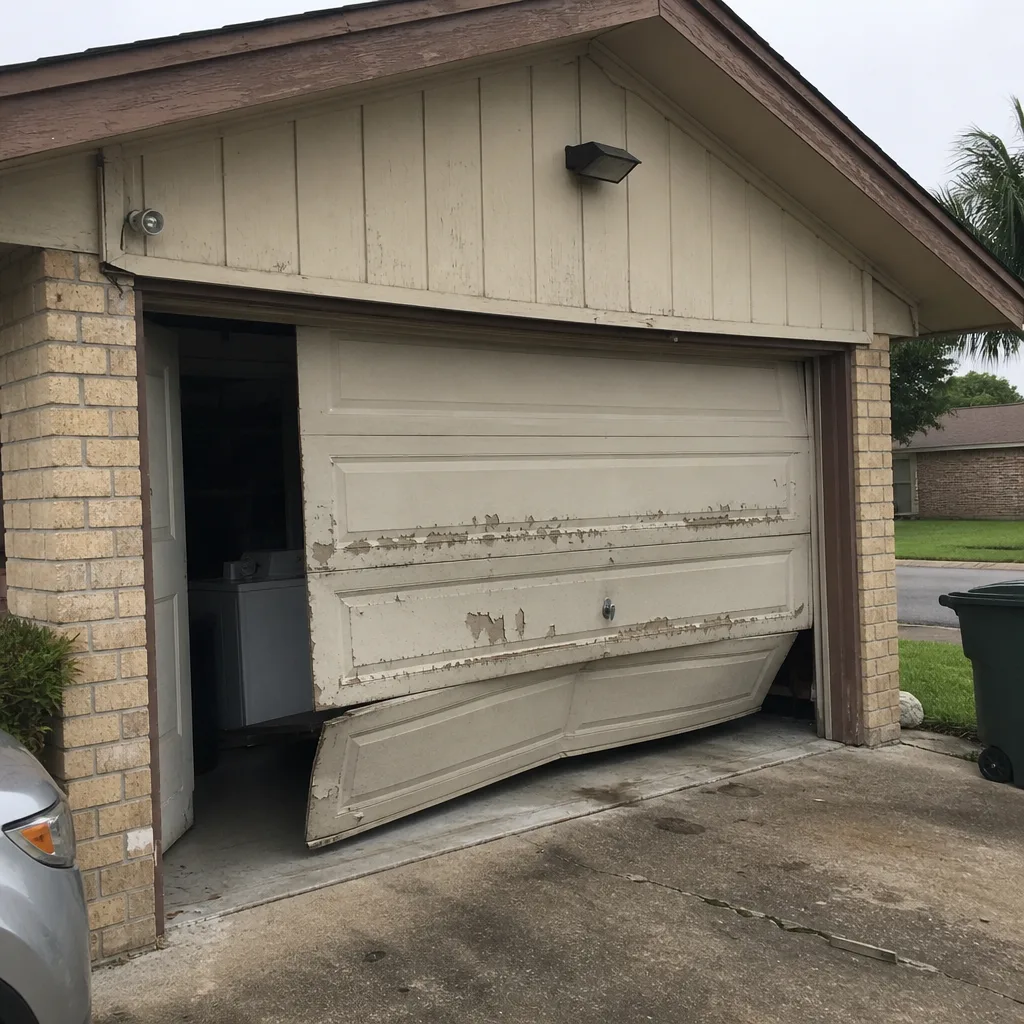 Before
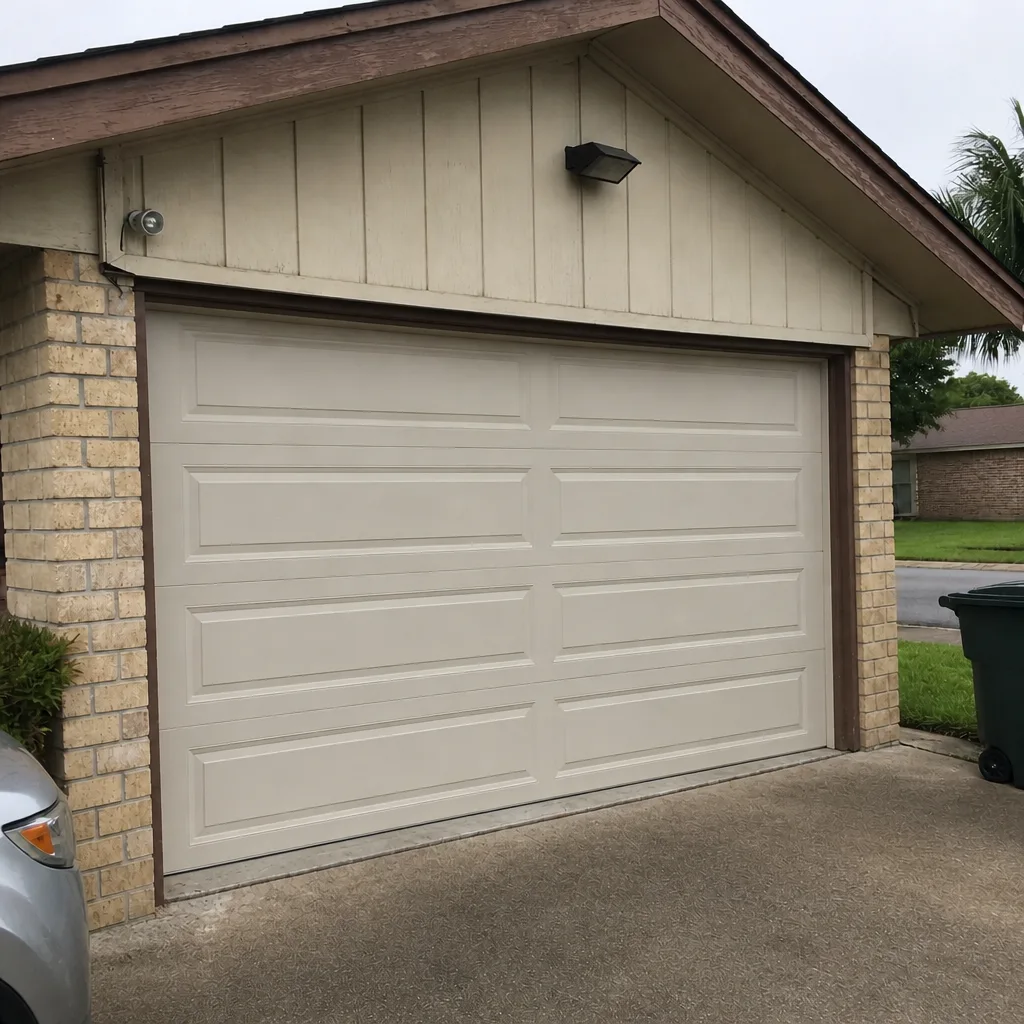 After
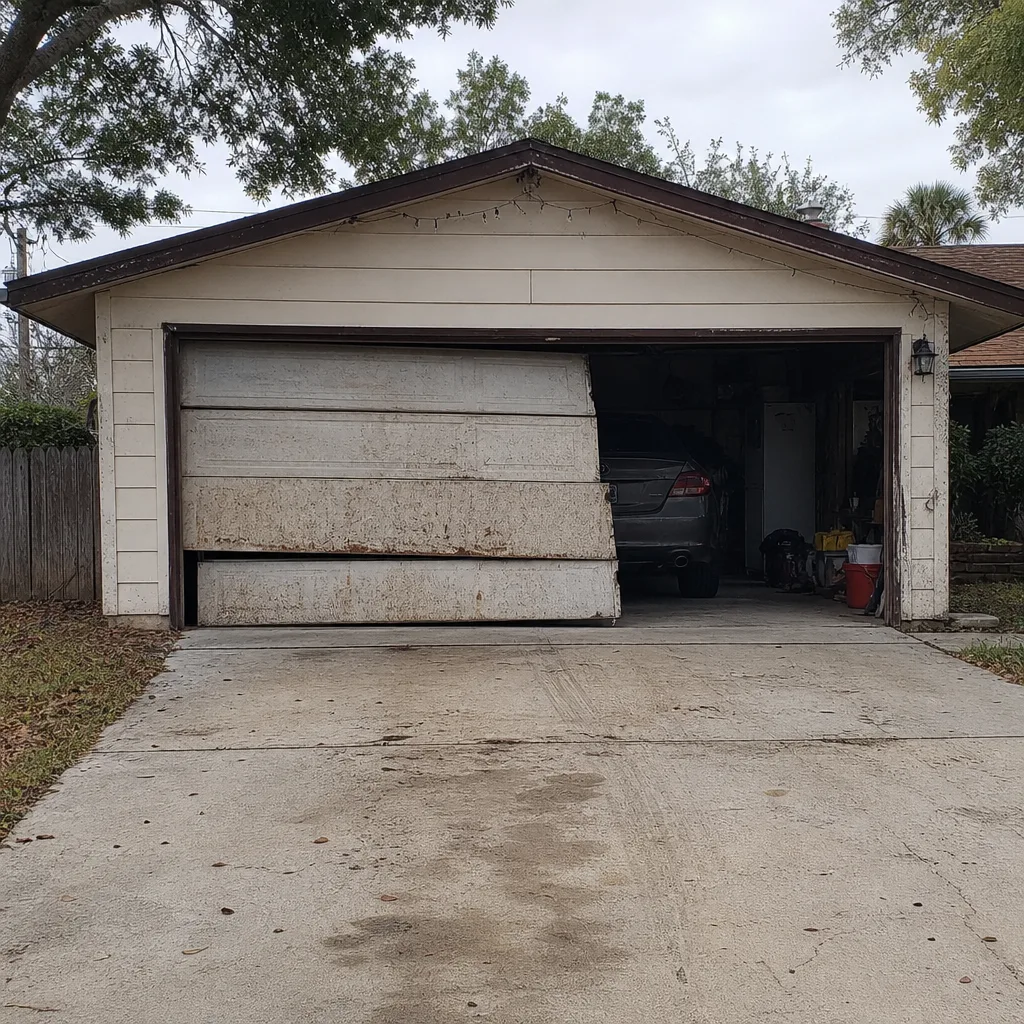 Before
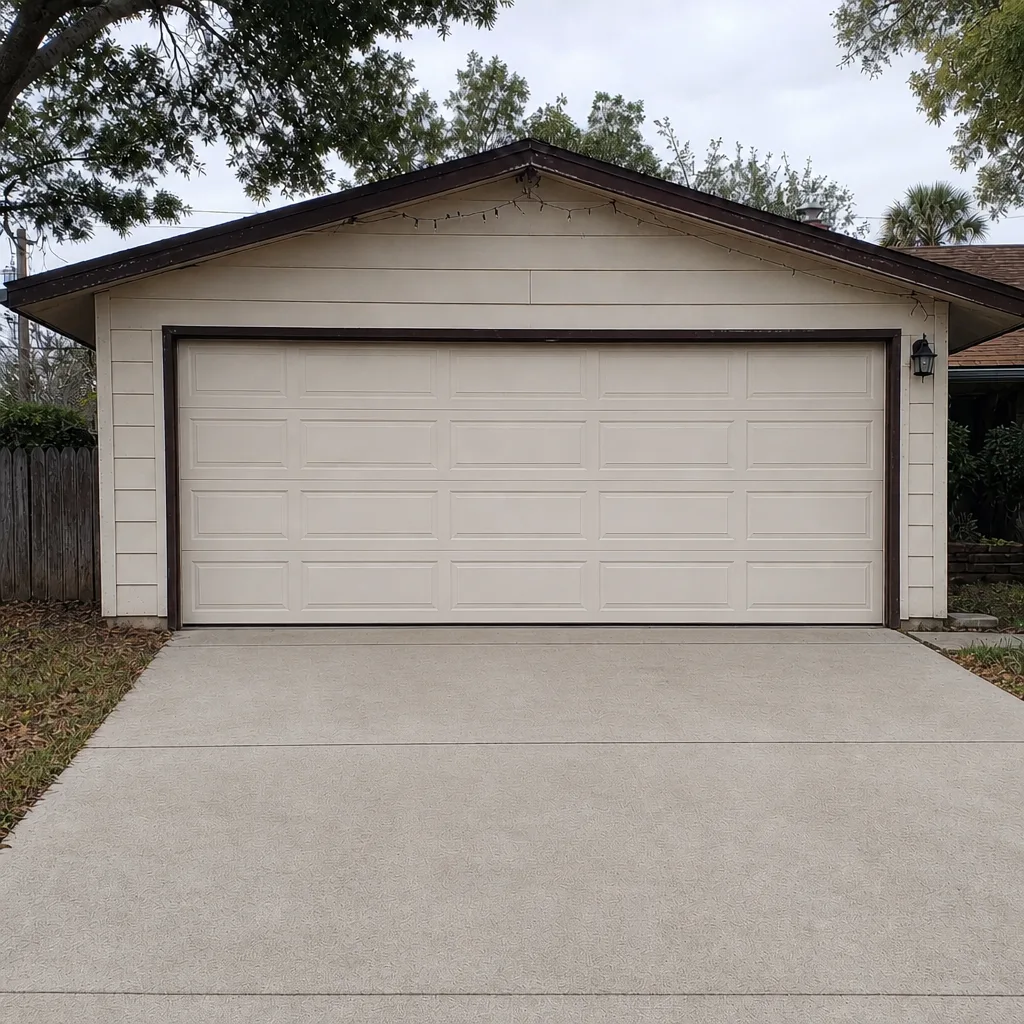 After
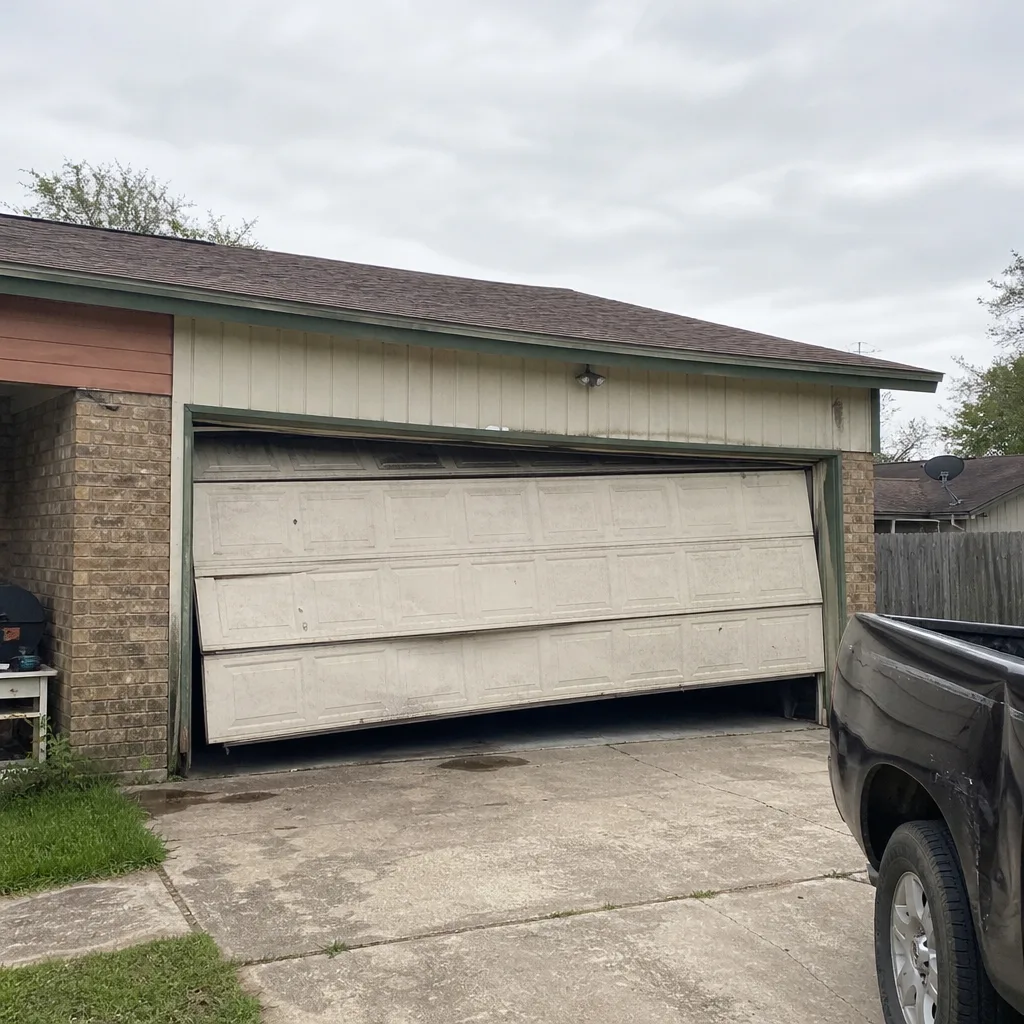 Before
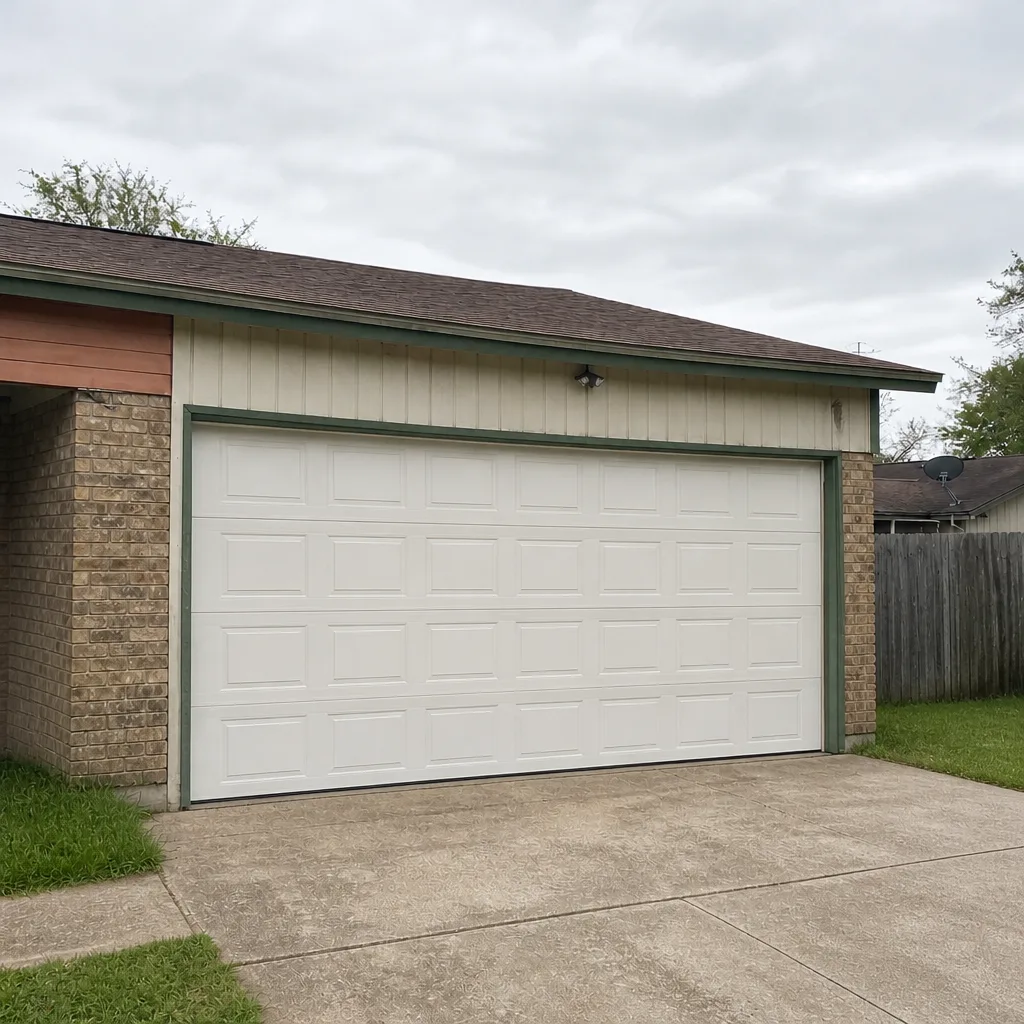 After
When to Call a Professional
Some garage door problems are true emergencies and some are just best handled by a professional. Emergencies: a spring has broken, the door is stuck open and won’t close, or you hear something snap. A stuck door is a home security issue even if the door isn’t broken. Rest of the list: unusual noises, door reversal or hesitation, sagging panels, damaged tracks, an opener that’s cycling oddly or not responding to a remote, or any wear that’s more than cosmetic.
If you’re not sure whether a problem is urgent, it’s cheaper to ask than to wait. Use the mild winter window for the annual service and post-storm checks, and call when you see or hear something new. Amberly Garage Door Repair offers free estimates in Brownsville. Call (855) 360-7115. We answer 24/7. Fast dispatch from 7am to 7pm, Sunday through Friday.
Frequently Asked Questions
Once a year is the baseline, and the best time in Brownsville is the mild January to February window. That annual service plus post-storm checks after any heavy rain or high wind covers most of what a Brownsville door needs.
Springs are under constant tension, and sustained heat adds to the stress. In Brownsville, temperatures stay high around the clock and don’t ease the way they do in cooler climates, so springs face more cumulative load. When a spring fails, call a professional. Do not attempt to replace or adjust one yourself.
Inspect panels for dents or bends, tracks for straightness and stability, hinges and fasteners for rust or looseness, and the bottom and side seals for wear. Then test the door’s travel and the safety reverse. If the door binds, won’t close evenly, or the opener behaves oddly, get it looked at before using it again. Call (855) 360-7115 for a free estimate if the inspection turns up anything that worries you.
It can be either. In Brownsville summers, heat alone can cause a LiftMaster or Chamberlain opener to hesitate or cycle intermittently, especially if the door is out of balance or the rollers are worn. Repeated hesitation during cooler weather is more likely a failing part. Either way, it’s worth a service call. Estimates are free.
It depends on your door’s construction and wind rating. A door from an older install may not meet the wind expectations of the rating label, and reinforcement struts can help on some doors but not all. The practical first step is to have the door assessed before storm season. A technician can tell you what you have and what it needs.
Very likely. We work across eight brands: LiftMaster, Chamberlain, Genie, Clopay, Amarr, Wayne Dalton, Craftsman, and Raynor. That includes the two dominant smart-home opener platforms and several legacy systems. If your brand isn’t on that list, call and tell us what you have. Estimates are free, and a phone call will tell you whether we can help before anyone comes out.
The Bottom Line
Garage door care in Brownsville runs on a different calendar than the rest of the country. The mild January to February window is your annual service window. Pre-season storm prep in March through May is a real task, not a hypothetical. Summer heat deserves monthly attention on springs, openers, and sensors. Post-storm checks after every heavy rain or wind event catch small damage before it becomes a bigger repair. A door treated to one annual service and a few checks through the year will outlast one that’s only touched when it fails. Our technicians have up to 12 years of experience, and we work across every major brand and system, from LiftMaster to Raynor. If you’d like a free estimate on a service, a repair, or a new door, give us a call.
Call (855) 360-7115. We answer 24/7. Fast dispatch from 7am to 7pm, Sunday through Friday. Estimates are free. The price is quoted and agreed before any work starts.
Written by the team at Amberly Garage Door Repair.