
Last updated November 14, 2026
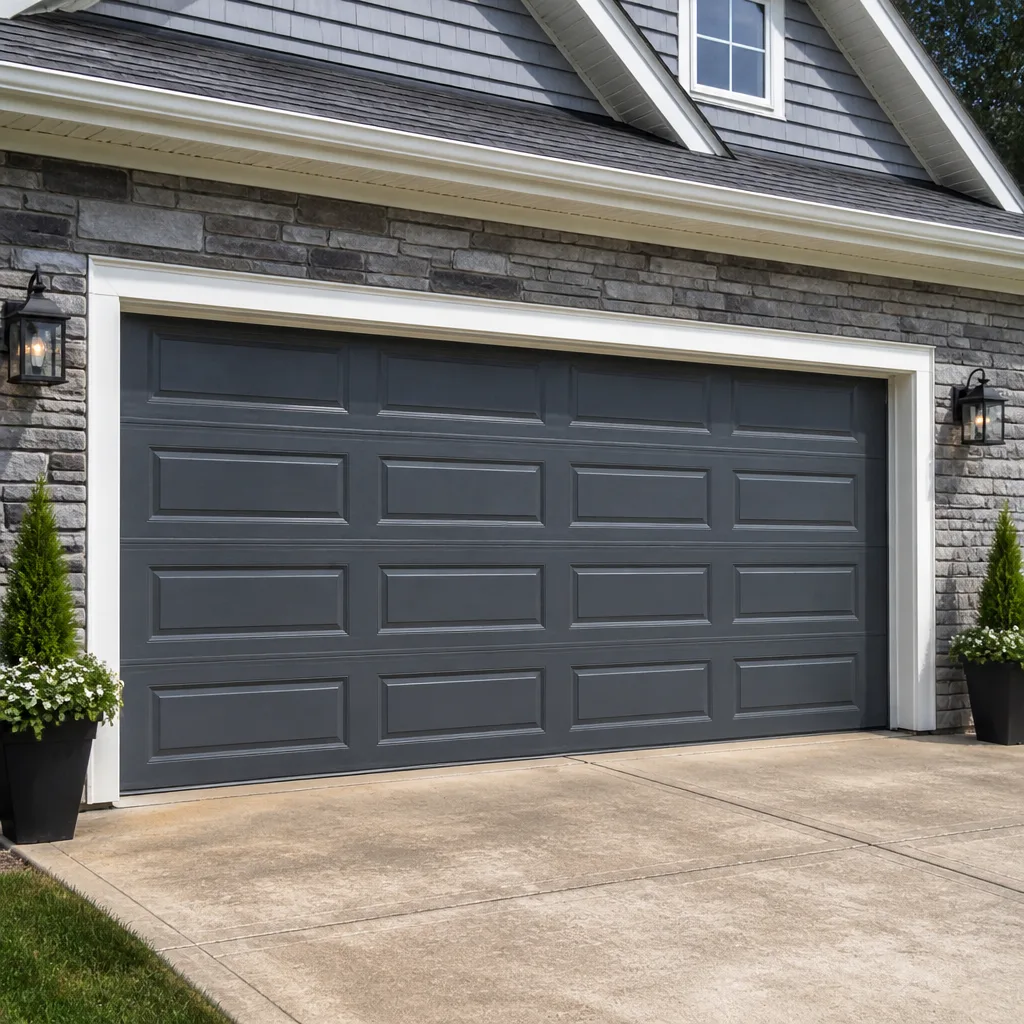 Raised-panel steel
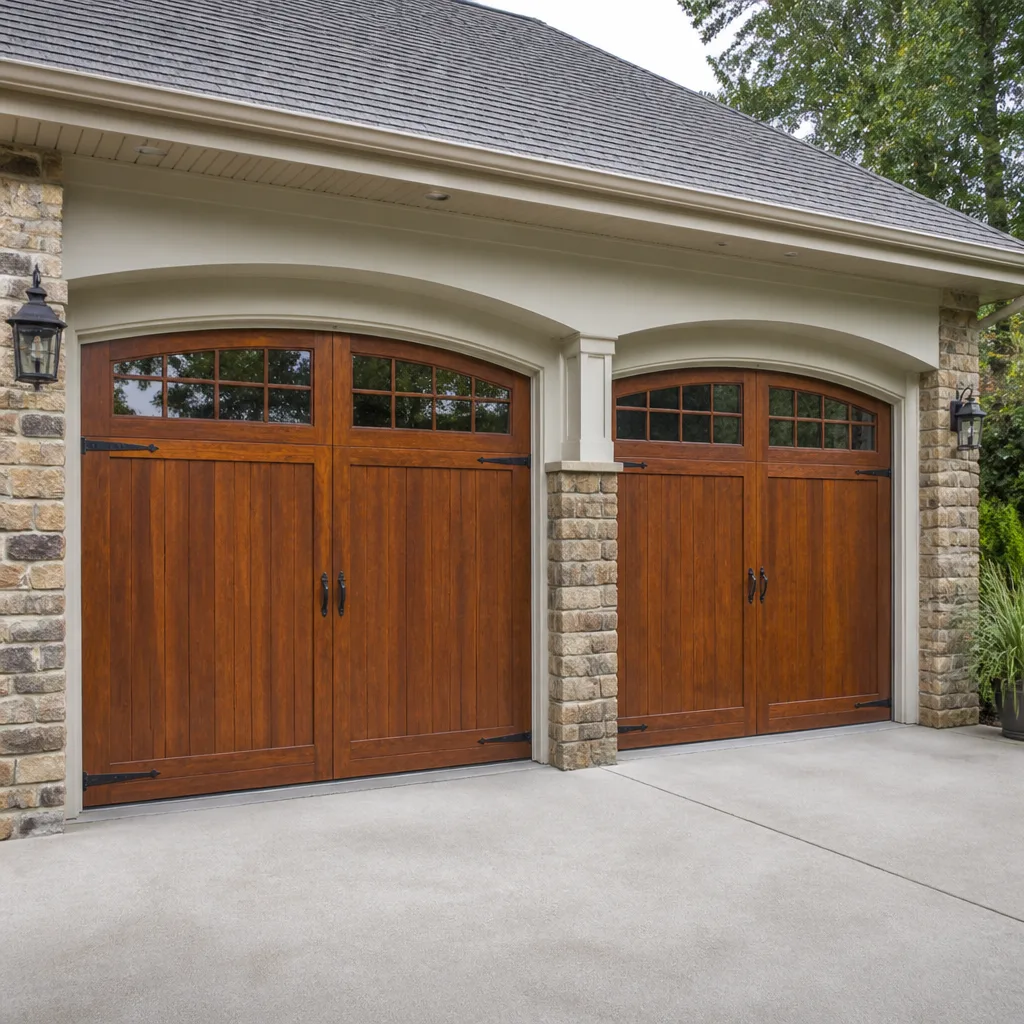 Carriage house
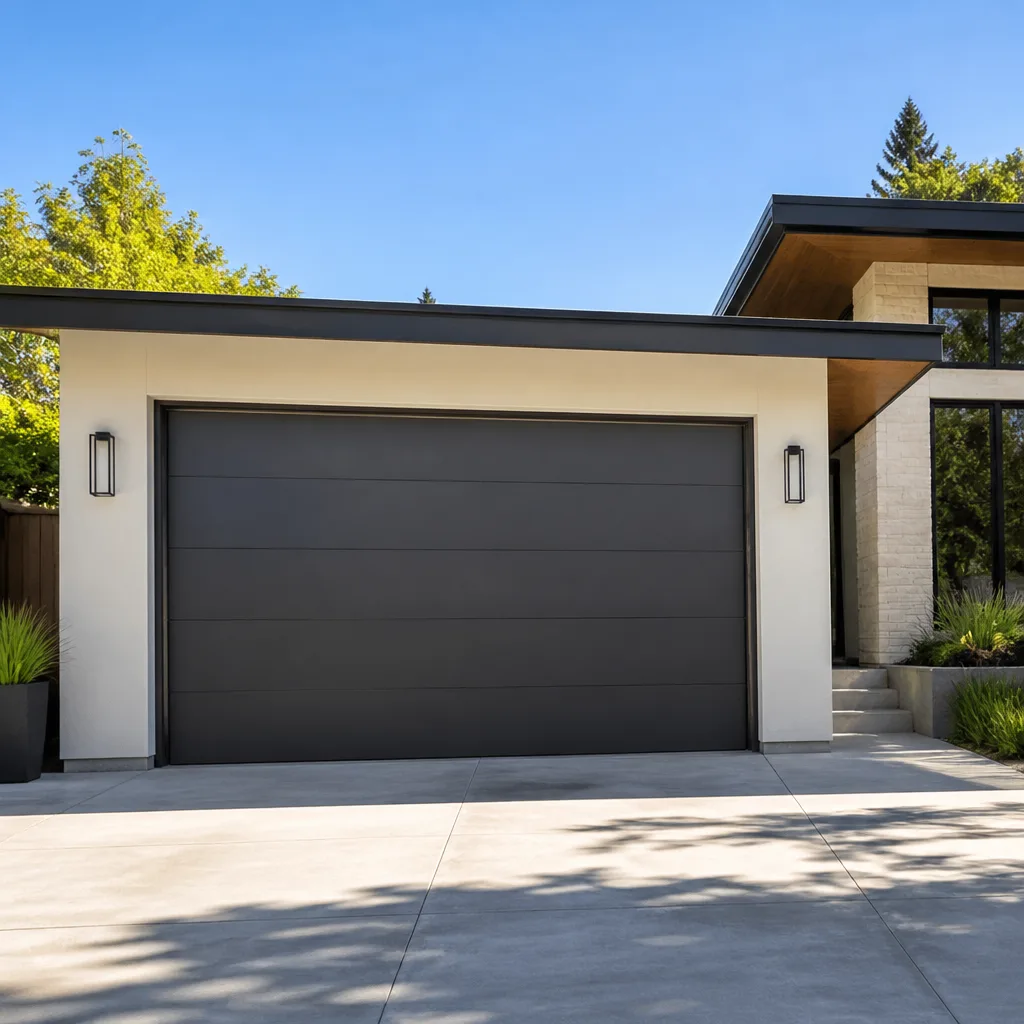 Modern flush
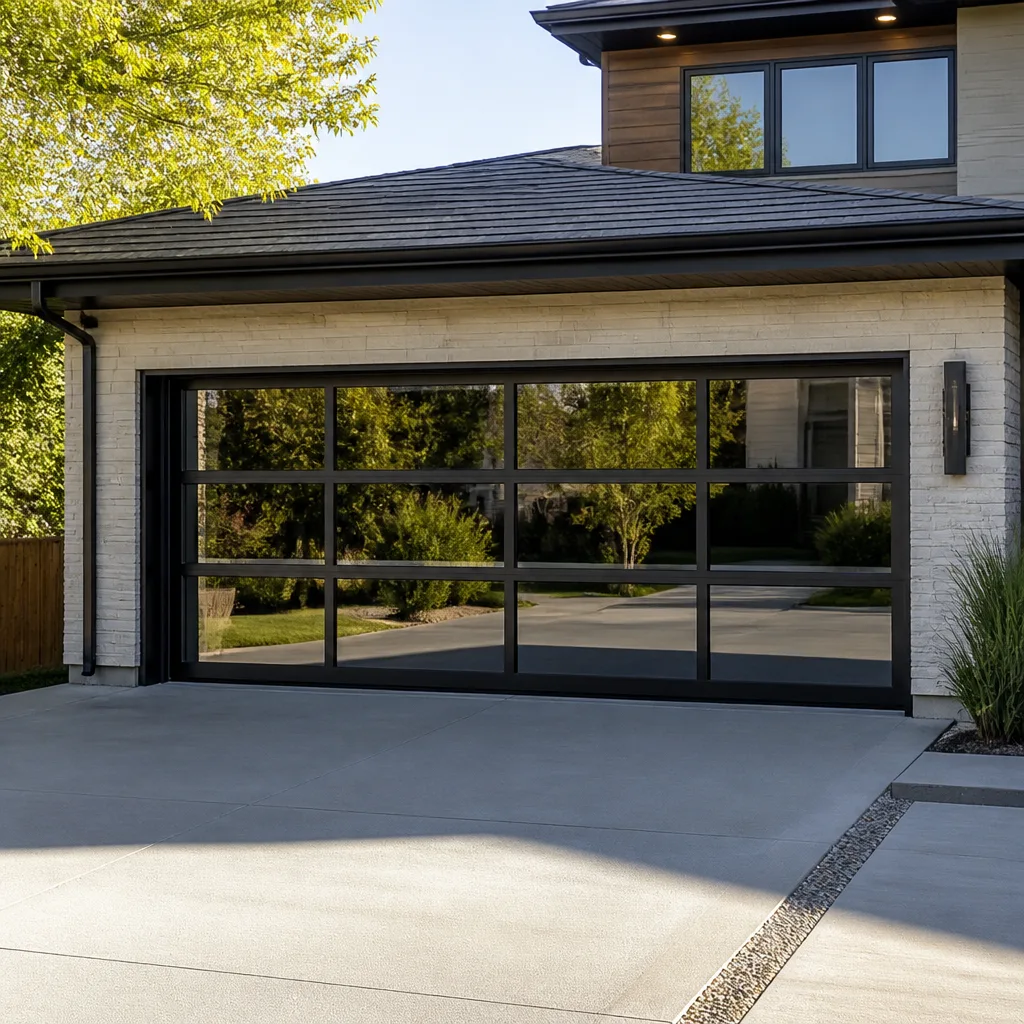 Full-view glass
 LiftMaster openers
 Chamberlain openers
Full 25-point door and opener safety check with every visit - springs, cables, rollers, tracks, and your LiftMaster or Chamberlain opener included
You get a price before we start. It does not change when the pro arrives.
Get your free estimateGarage Door Repair Maintenance Schedule: What to Do and When
Most garage door advice travels well. “Lubricate twice a year, tighten the bolts, listen for strange noises” works fine in a dry climate where the air is stable and metal behaves predictably. Brownsville isn’t that climate. The heat, the humidity, and the seasonal swings here put stress on springs, cables, and rollers on a different timeline than the generic checklist assumes. A schedule that keeps a door healthy in a desert town will let hardware corrode here long before anyone notices. What follows is a maintenance calendar built around what South Texas weather actually does to a garage door – month by month, component by component, with the specific checks that catch wear before it turns into a snapped spring or a door that won’t close.
Quick Answer
In Brownsville, plan on lubricating moving parts every three months instead of twice a year, inspecting cables and rollers for early corrosion monthly during the humid stretches, and scheduling a professional tune-up once a year before summer heat builds. Springs, rollers, and opener hardware wear on different timelines, so track them separately rather than treating the whole door as one service interval.
Styles & brands we work with
- Raised-panel steel
- Carriage house
- Modern flush
- Full-view glass
- LiftMaster openers
- Chamberlain openers
Table of Contents
- Why the generic schedule fails in Brownsville
- The month-by-month maintenance calendar
- Which lubricants hold up in humidity (and which gum up your tracks)
- Hardware tension and torque checks that extend spring life
- How to spot early corrosion on cables and rollers
- Springs and rollers don’t wear on the same schedule
- Building a maintenance log that actually gets used
- What to do monthly versus what to leave to a professional
Why the generic schedule fails in Brownsville
A garage door is a system of moving metal parts under constant tension, and metal responds to its environment. In Brownsville, the environment is warm and humid for much of the year, with a winter stretch where temperatures slide lower and the air can feel damp in a way dry-climate homeowners never deal with. That combination changes how fast lubricant breaks down, how quickly bare steel starts to oxidize, and how often you need to look at things.
The practical result is that the “twice a year” rule underserves this region. Lubricant applied in spring can thin and migrate by midsummer heat. Rollers that would last years in a dry garage may start to drag sooner here because moisture finds its way into the bearings. And springs – the parts holding the door’s weight – take on a workload that shifts with temperature, so they’re worth watching more closely than a national checklist suggests.
- Humidity drives corrosion. Bare metal on cables and roller bearings oxidizes faster when the air holds moisture, especially in a garage that isn’t climate-controlled.
- Heat thins lubricant. A product that stays put in a cool climate can migrate off the tracks and hinges in a Brownsville summer.
- Seasonal swings stress springs. Metal expands and contracts with temperature, and every cycle adds wear to a torsion or extension spring already working hard.
- Airflow matters. Garages that trap warm, damp air hold moisture against hardware longer, which shortens the window between inspections.
None of this means your door is fragile. It means the schedule needs to match the climate. If your door is newer or you’re not sure what system you have, our Amberly Garage Door Repair team can identify the components and set a baseline before you start tracking anything.
The month-by-month maintenance calendar
Treat the year in seasons rather than flipping a page on a calendar. Brownsville’s pattern – a hot, humid stretch, a hurricane-season window, and a cooler winter where damp air lingers – gives you natural checkpoints. Here’s how to lay it out.
- Late winter / early spring (pre-summer prep): Before the heat builds, lubricate hinges, rollers, and the torsion bar or extension springs, and test the door’s balance by hand. This is the most important service window of the year because it readies the door for the months that work it hardest.
- Late spring: Inspect cables for fraying and check that all track bolts and hinge screws are snug. Clean the tracks and wipe away old grease before it traps grit.
- Summer: Re-check lubricant monthly instead of quarterly during peak heat. Listen for new squeaks or grinding, which signal that a roller or hinge is running dry.
- Hurricane season (roughly June through November): Do a hardware check after any significant storm – walk the door, test the auto-reverse, and look at how the door sits in the opening. High wind and pressure changes can shift a door out of alignment.
- Fall: Full inspection pass. Check spring tension visually, examine cable condition, and test the opener’s safety features.
- Winter humidity awareness: Even in the cooler months, damp air can settle into a closed garage. Keep an eye on bare metal for early rust and reapply lubricant where it’s worn thin.
If a door or opener has been sitting through a Brownsville summer without attention, a professional tune-up catches the small problems before the calendar turns. That’s the kind of work our garage door repair service handles routinely – adjusting, lubricating, and replacing worn parts so the door keeps running smoothly.
Which lubricants hold up in humidity (and which gum up your tracks)
The right lubricant in a humid climate is one that stays where you put it, resists washing out, and doesn’t turn into a magnet for dust. The wrong one does the opposite: it thins, runs, and collects grit until the tracks feel gritty and the door starts to drag.
Here’s the practical split for Brownsville conditions:
- White lithium grease: Good for metal-to-metal contact points like hinges and the torsion bar, but apply it sparingly. In heat it can thin, so it’s better on parts that aren’t exposed to constant friction from rollers.
- Silicone spray: A solid choice for tracks and rollers because it goes on dry and doesn’t attract dirt. It holds up reasonably well in humidity without turning gummy.
- Garage-door-specific lubricant: Formulated to stay put under temperature swings and resist moisture. The best option when you can get it, especially for springs and hinges.
- WD-40 (the standard multi-use product): Fine as a quick cleaner or for loosening a stuck bolt, but it’s not a lasting lubricant. It evaporates and leaves parts drier than before, so don’t rely on it for ongoing protection in a humid garage.
- Heavy grease or motor oil: Attracts dust and grit in an open garage environment. It can gum up tracks within weeks here, which is the opposite of what you want.
The pattern to remember: dry-film products (silicone) and purpose-made garage door lubricants win in humidity. Anything sticky or petroleum-heavy turns into a dirt trap. If your tracks already feel gritty, cleaning them out before reapplying is half the job. When a door has been running dry for a while, our garage door opener repair team can also check whether the opener motor has been straining against the added friction.
Hardware tension and torque checks that extend spring life
Springs carry the full weight of the door, and the hardware around them – the torsion bar, the drums, the hinges, the tracks – either supports that load evenly or lets it wear unevenly. In a climate with real temperature swings, metal expands and contracts, and fasteners that were snug in cool weather can loosen as things heat up. Checking torque is how you keep the load balanced.
Here’s what a check involves, and where the safety line is:
- Check hinge and track bolts for snugness. A socket wrench or screwdriver is enough – snug, not overtightened. Loose hinges let the door rack and put uneven stress on the springs.
- Look at the torsion bar and drums. Visual inspection only. Note any shifting, unusual gaps, or wear marks that weren’t there before.
- Test the door’s balance. Disconnect the opener and lift the door halfway by hand. A balanced door stays put; one that drifts down or shoots up is telling you the spring tension is off.
- Listen during operation. A door that groans, pops, or hesitates is signaling uneven load somewhere in the system.
Safety note: Springs and the cables attached to them are under extreme tension. Adjusting tension, winding or unwinding a spring, or working on the cables is genuinely dangerous and can cause serious injury. That work belongs to a trained professional. What you can safely do is inspect, listen, and keep fasteners snug. If the balance test shows the door drifting, stop and call for service rather than trying to correct it yourself. Our technicians have up to 12 years of experience with spring systems, and the adjustment is a routine part of a professional tune-up.
How to spot early corrosion on cables and rollers
Corrosion rarely announces itself. It starts small – a dull patch on a cable, a roller that turns a little stiffly – and by the time it’s obvious, the part is ready to fail. Early detection is the whole point of a monthly visual pass in Brownsville’s humidity.
What to look for on cables:
- Fraying or broken strands. Run your eyes along the length of each cable. Any loose wire or a “birdcage” bulge is a serious warning sign.
- Discoloration. A cable that’s gone dull, brownish, or patchy has likely started to oxidize.
- Kinks or uneven tension. One cable that hangs looser than the other means the door is loading unevenly.
- Rust at the connection points. Where the cable attaches to the bottom bracket and drum, moisture collects and corrosion starts first.
What to look for on rollers:
- Stiff or noisy rotation. A roller that grinds or won’t spin freely has a bearing that’s drying out or corroding.
- Visible rust on the stem or wheel. Even light surface rust means moisture is getting in.
- Flat spots or wobble. Worn rollers make the door jump in the track.
Cables are under tension, so don’t touch, tug, or try to adjust them. Inspection is eyes-only. If you see fraying or kinks, that’s a call-a-professional situation, and it’s worth doing promptly – a failing cable is one of the more common reasons a door suddenly won’t operate. If you’re in one of Brownsville’s older neighborhoods where garages see more seasonal moisture, a monthly look is worth the two minutes. Our Brownsville team can inspect and replace worn cables and rollers as part of a repair visit.
Springs and rollers don’t wear on the same schedule
This is the part most maintenance checklists get wrong. They treat the garage door as one unit with one service interval, when in reality the components inside it wear at very different rates. Springs, rollers, cables, and the opener motor each have their own lifespan and their own warning signs. Tracking them separately is how you avoid replacing a part that was fine and missing the one that was about to fail.
- Springs have a finite cycle life – they’re counted in open-and-close cycles, not months. A household that opens the door several times a day will wear its springs faster than one that uses it twice. Watch for balance problems and unusual noise, and have them inspected annually.
- Rollers wear from friction and corrosion. Cheap plastic rollers wear faster than nylon or steel; steel rollers need lubrication to resist rust in humidity. Inspect monthly during Brownsville’s damp stretches.
- Cables wear from tension and moisture. They’re the part most likely to fail suddenly, so visual checks matter more than service intervals.
- The opener motor runs every time the door moves. If the door itself is dragging because of worn rollers or dry tracks, the opener works harder. Keeping the door in shape is the best thing you can do for the opener.
Because the door and the opener are one integrated system, a problem on one side often shows up as a symptom on the other. A door that suddenly reverses or a motor that strains usually traces back to door hardware, not the opener itself. That’s why we diagnose root causes rather than just swapping parts. Doors from LiftMaster openers, Wayne Dalton doors, and Raynor systems all have their own service quirks, and we work on the brand you already have.
Building a maintenance log that actually gets used
A maintenance log only works if it’s simple enough to keep up with. The goal isn’t a perfect record – it’s a quick way to answer the question “when did I last do this?” without relying on memory. Keep a small notebook, a note on your phone, or a sheet taped inside the garage. Whatever you’ll actually use.
Structure the log by component, not by date, so each part gets its own track:
- Lubrication – date applied, which parts (hinges, rollers, springs, tracks), and which product.
- Balance test – date and result (door stays put, drifts down, drifts up).
- Cable and roller inspection – date, anything noted (fraying, stiffness, rust).
- Fastener check – date and any loose bolts found and tightened.
- Professional service – date, what was done, and what the technician flagged for next time.
- Spring notes – when the door started showing balance issues or odd noises, so you have a timeline to share at the next inspection.
Each line has its own interval, which is the whole point. The lubrication line fills up four times a year, the balance test quarterly, the inspection monthly in humid months. When you call for service, the log tells the technician the door’s recent history in a few seconds – and that’s more useful than trying to remember whether the noise started in spring or summer. It also tells you when a component hasn’t been checked in a while, which is exactly when small problems slip through.
What to do monthly versus what to leave to a professional
Knowing the line between owner maintenance and professional service saves time and keeps you safe. Here’s the practical split for a Brownsville garage door.
Oh, wait – you’re looking at the safest jobs to do yourself:
- Lubricating hinges, rollers, and springs with a suitable product.
- Cleaning grit and old grease from the tracks.
- Testing the door balance by hand.
- Testing the opener’s auto-reverse and safety sensors.
- Visually inspecting cables, rollers, and fasteners.
- Checking and snugging loose bolts on hinges and tracks.
Leave to a trained professional:
- Adjusting or replacing springs and the cables attached to them.
- Replacing a broken spring, which is a high-tension job.
- Diagnosing a door that won’t open evenly or reverses unexpectedly.
- Repairing or replacing opener motors and controls.
- Realigning a door that has been knocked out of its tracks.
The pattern is the tension. Anything holding the door’s weight stays in professional hands. Routine lubrication, inspection, and cleaning are yours. Our team works with eight major brands – LiftMaster, Chamberlain, Genie, Clopay, Amarr, Wayne Dalton, Craftsman, and Raynor – so whether your door is a premium model or a legacy opener, the service call covers what you’ve got. When it comes to the split between owner and pro, the safest rule is: if it’s under load, call.
Common Mistakes to Avoid
- Following a national schedule in a humid climate. Two lubrications a year is too few in Brownsville. Stretch it to quarterly and watch the door for signs of dryness between applications.
- Using the wrong lubricant. Standard WD-40 evaporates and leaves parts dry, and heavy grease attracts grit. Opt for silicone spray or purpose-made garage door lubricant that resists moisture.
- Trying to adjust spring tension yourself. This is the single most dangerous job on a garage door. Springs are under extreme tension; adjusting or replacing them is professional work.
- Treating the door as one service interval. Springs and rollers wear at different rates. Track each component separately or you’ll replace good parts and miss failing ones.
- Skipping the inspection after a storm. Brownsville sits in hurricane season territory. High wind and pressure changes can shift doors and weaken hardware. A quick walk-around after a big blow catches alignment problems early.
- Ignoring a noisy door. Squeaks and grinding are early warnings, not just annoyances. They usually point to dry rollers or loose hinges – caught early, they’re cheap to fix.
- Letting grit build up in the tracks. A dirty track wears out rollers faster and strains the opener. Clean it out before you relubricate, not after.
See the difference
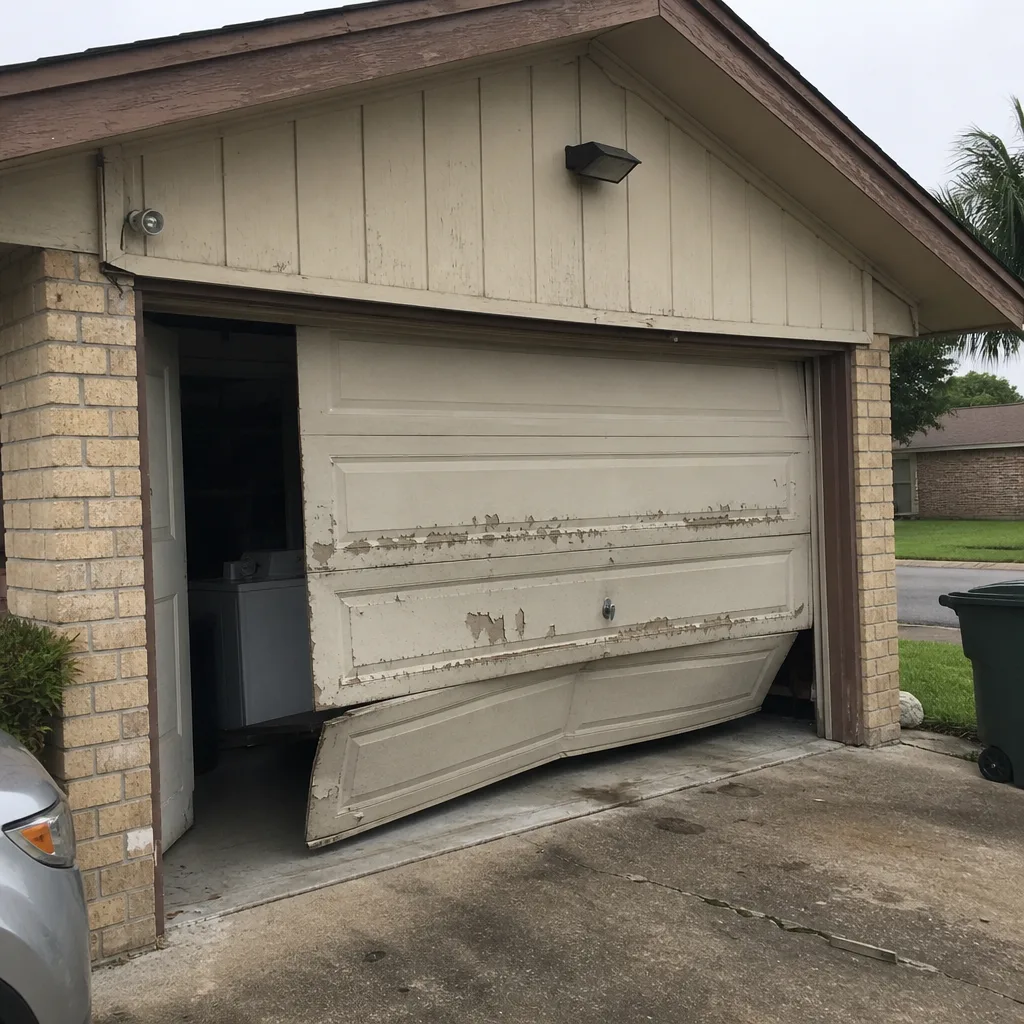 Before
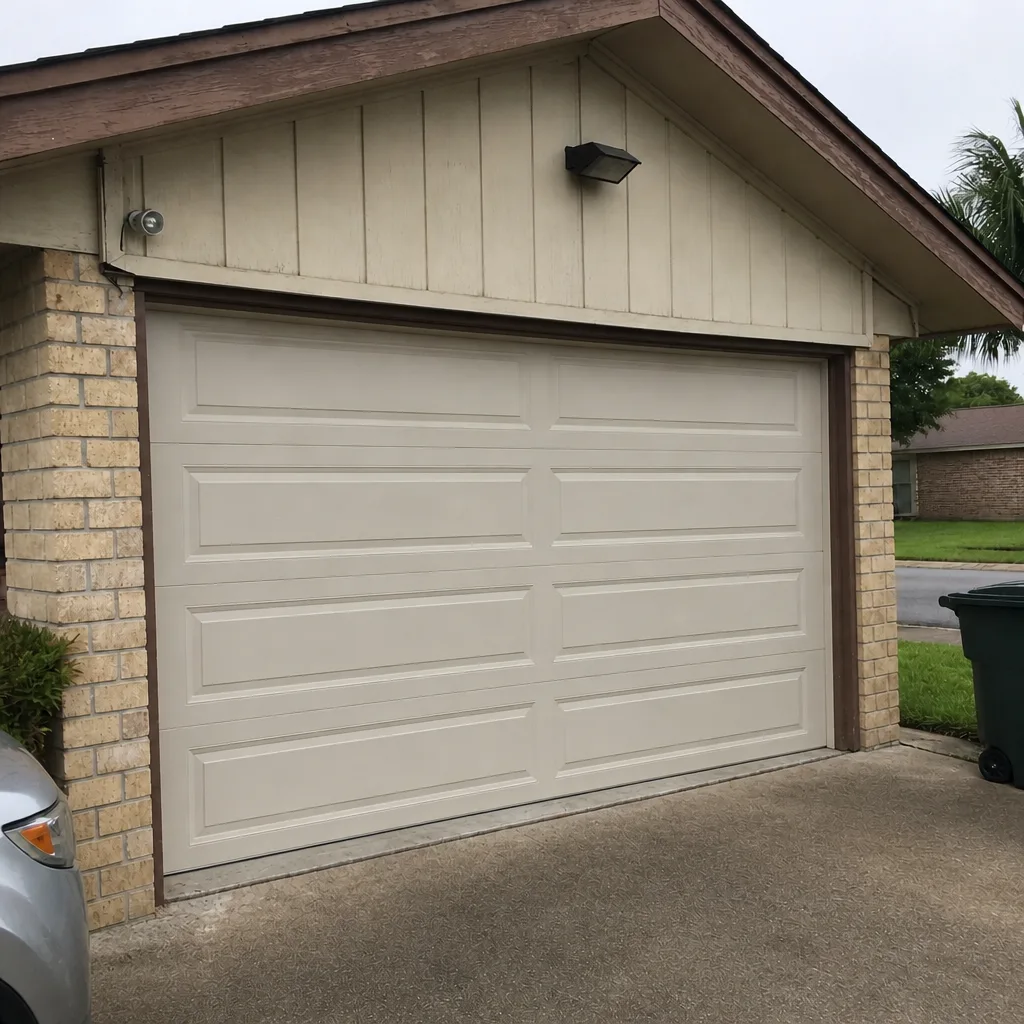 After
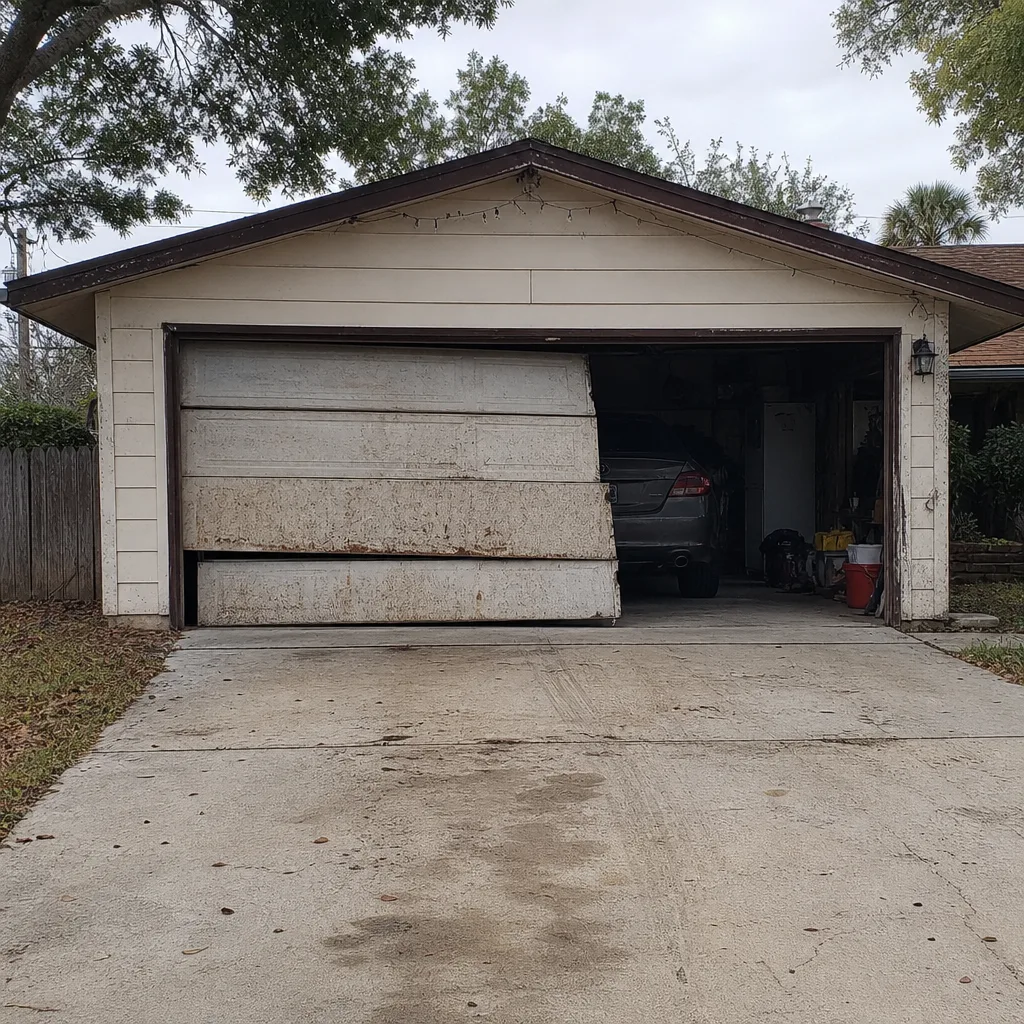 Before
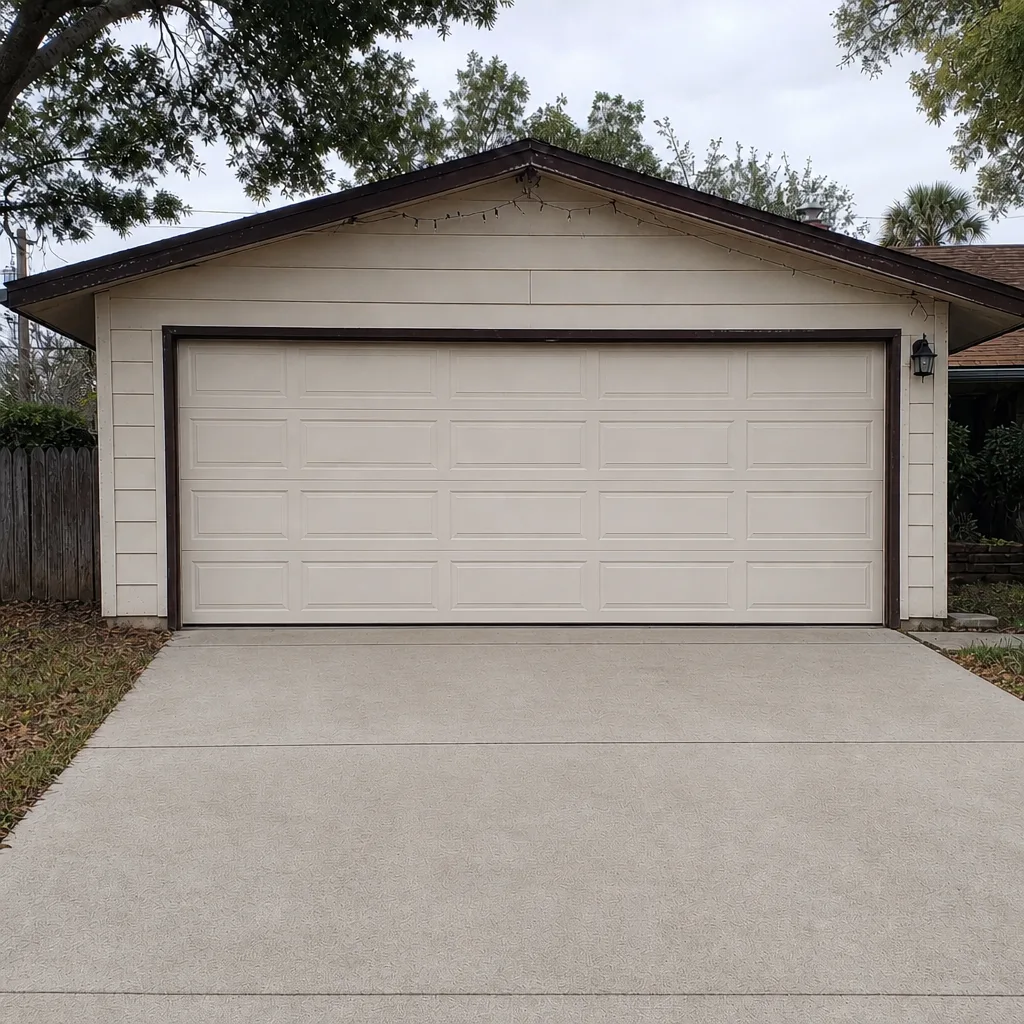 After
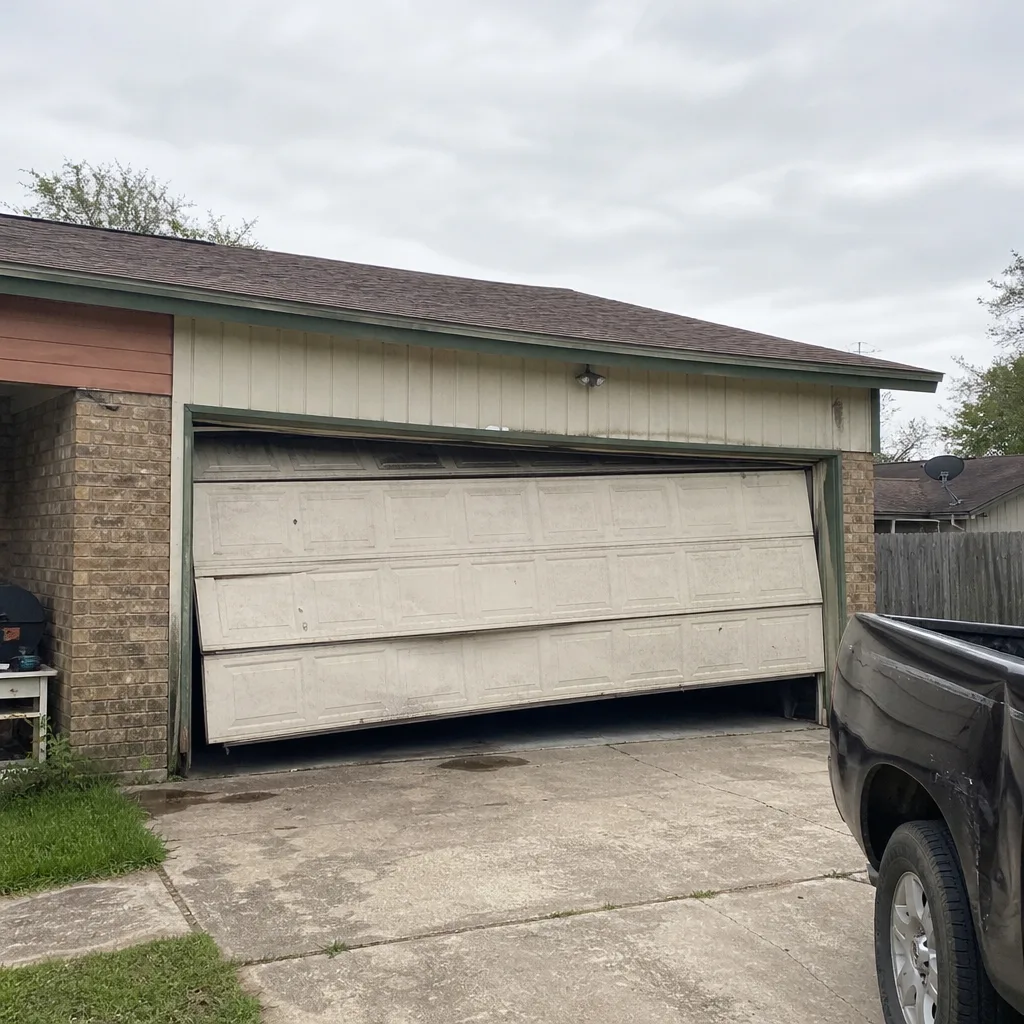 Before
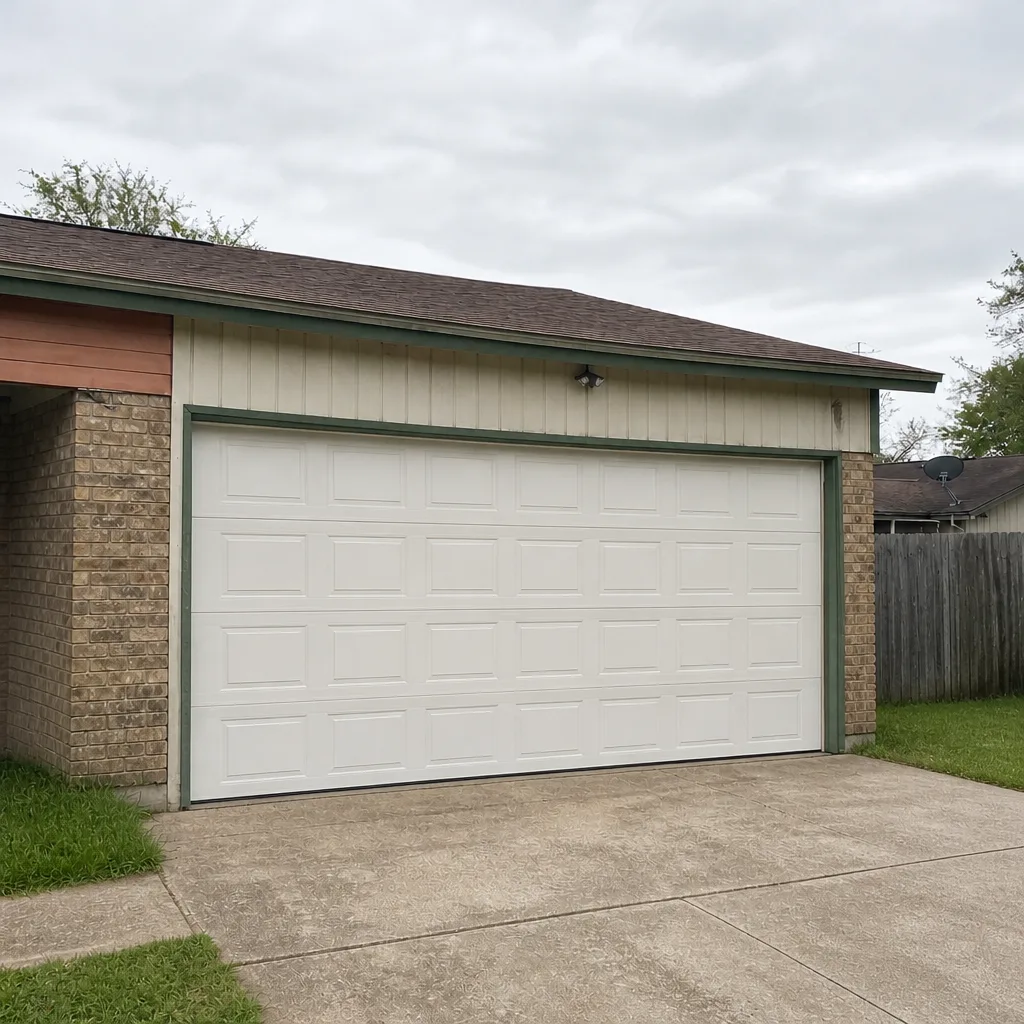 After
When to Call a Professional
Some situations need a trained eye and trained hands. Call when the door comes off its tracks, when a spring is broken or the door won’t hold its balance, when you see a frayed or kinked cable, or when the opener reverses for no clear reason. Strange noises that don’t go away after lubrication, a door that closes unevenly, and any work involving spring tension all belong in professional hands. These are the jobs where the risk of doing it yourself outweighs the cost. Amberly Garage Door Repair offers free estimates in Brownsville – call (855) 360-7115. We answer 24/7, and fast dispatch runs from 7am to 7pm, Sunday through Friday.
Frequently Asked Questions
Every three months is the right rhythm here, not the twice-a-year schedule you’ll see on most national checklists. Humidity and heat break lubricant down faster, so a quarterly pass keeps parts protected.
Silicone spray and garage-door-specific lubricant work best because they resist moisture and don’t attract dirt. Standard WD-40 evaporates, and heavy grease turns tracks into grit magnets. Stick with dry-film or purpose-made products.
Temperature swings stress metal differently than a steady dry climate does. Add humidity to the mix and springs take on more wear over time, which makes annual inspection and balance testing more important than the cycle count alone.
No. Springs and the cables attached to them are under extreme tension, and adjusting them without training can cause serious injury. Inspection and lubrication are yours; spring adjustment and replacement are work for a trained professional.
Late winter or early spring, before the summer heat builds, is the best window. It readies the door for the months that work it hardest and gives you a baseline to track the rest of the year. If the door is already making noise or drifting, call sooner.
Walk the door and test the auto-reverse, check alignment in the opening, and look at the cables and rollers for any new damage. High wind can shift a door out of its tracks or knock hardware loose. If anything looks off, don’t run the door; get it inspected.
The Bottom Line
The right maintenance schedule for a Brownsville garage door runs on quarterly lubrication, monthly visual inspection during humid stretches, and an annual professional tune-up before summer. Springs and rollers wear on different timelines, so track them separately rather than treating the door as one interval. Use a lubricant that holds up to moisture, watch for early corrosion on cables and rollers, and keep spring tension in professional hands. A few minutes a month, plus one service visit a year, is what keeps a door running smoothly through the heat and humidity here. Call (855) 360-7115 for a free estimate. We answer 24/7. Fast dispatch from 7am to 7pm, Sunday through Friday.
Written by the team at Amberly Garage Door Repair.